 jessica@honch-etech.com
 English

 Item(s)

Several common solutions for chip discontinue production
For enterprises producing semiconductor application equipment, the discontinuation or elimination of semiconductor products is a very common risk, so it is necessary to take corresponding measures.
Generally speaking, about 70% of semiconductor products and electronic components used in products with longer product lifetimes, such as industrial/equipment and social infrastructure, will be discontinued as component semiconductors before the end of their product lifespan. This is an unavoidable fact, therefore, how to deal with semiconductors that have been discontinued or become obsolete has always been a problem that requires continuous research.
1.The life cycle of semiconductor products with an average lifespan of 3-5 years
Before researching countermeasures, we hope to verify the lifecycle of semiconductor products again. Figure 1 shows the typical lifecycle of semiconductor products. After completing product development, various semiconductor suppliers begin mass production through the prototype manufacturing phase. Afterwards, while observing market trends, once it is confirmed that demand is starting to decline, the production shutdown process will begin. During the period after shutdown, semiconductor manufacturers will still provide products according to orders, but after the semiconductor manufacturers stop supplying products, they will also provide various other services for continuous supply.
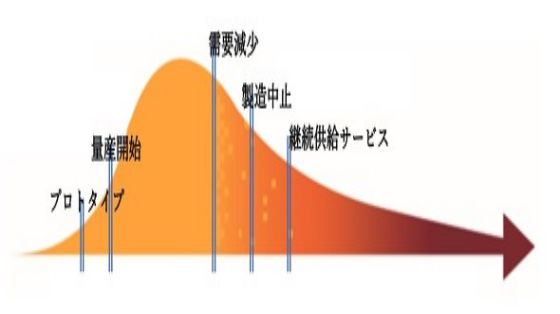
Figure 1: The lifecycle of semiconductors
In fact, it is reported that the average lifespan of many semiconductor products (including their substitutes) in the entire semiconductor industry is less than 3-5 years, and some product categories often have a lifespan of only about 2 years.
2. Production stoppage issue
So, how should we solve the issue of production stoppage? To solve this problem, the ultimate goal is to purchase semiconductor products with the same appearance/size and the same function as those that have been discontinued. In response to this goal, many companies have launched various so-called "discontinued product replacement solutions" and claim that these solutions can meet the above requirements.
However, many solutions cannot meet these requirements. Whether from the perspective of product supply or technology, these solutions have not become comprehensive and durable solutions, often providing incomplete solutions such as incomplete matching or short lifespan.
Of course, the quickest and most economical way for semiconductor manufacturers to respond when they issue a product shutdown notice is to ensure that the semiconductor application products using the semiconductor product can cover their expected service life by making the final purchase of the required quantity and storing the purchased products.
In some cases, the final purchase of related semiconductor products may also be made in the form of wafers. However, purchasing in the form of wafers is not always feasible.
On the other hand, sometimes it may not be possible to utilize the inventory held by semiconductor manufacturers or miss the release of production stoppage notices.
In addition, companies may lack the funds needed for large-scale final procurement, or even if they can raise funds, they may not have facilities to safely store inventory.
Semiconductor manufacturers usually manage that customers can only purchase products from the original factory or authorized agents to avoid customers buying counterfeit or low-quality products. Therefore, it is difficult for enterprises to freely purchase the required quantity of products according to their needs.
3. General alternative solutions
Semiconductor manufacturers need to continuously develop technology and products in order to meet the market's demand for technology, and the lifecycle of semiconductor products is also shortening year by year. Semiconductor manufacturers usually prepare successor products, but not all products have corresponding successor models. As a result, various alternative solutions that can compensate for the shortcomings of the original factory are constantly increasing, and currently the following alternative solutions are provided.
1. Simulation
Simulate or replicate the original operating functions of IC chips. The final product unit price is relatively high, and in most cases, the development cycle is long, and the development cost is often high. In addition, during the development process, it is necessary to confirm timing, noise sensitivity, power consumption, processing capability, and functionality in a simulation environment. However, since these components have not been confirmed in the actual system environment, they need to be re certified.
2. ASIC
It is not developed as a universal product, but as a customized integrated circuit for specific purposes. Using the manufacturer's manufacturing process to replicate the electrical functions of the original semiconductor product. The manufacturing cost of ASIC products may be very high and the efficiency may not be ideal. Therefore, when dealing with shutdown issues, gate array or standard cell technology is usually used.
3. Gate array
On an IC chip, standard NAND gates, NOR gates, and other logic circuits are configured in a fixed form, as well as passive components such as independent transistors and resistors, and wiring layers are added on top of them to form a semiconductor circuit product. If the digital gate remains unconnected, the chip itself does not have specific functions. Semiconductor manufacturers will add a final surface layer for connecting logic circuits, which can be one or more layers, to generate the required functionality.
4. Standard Unit
Prepare various logic units, memories, and analog circuits in advance as a unit library for optimization design, and then combine these units to design and manufacture integrated circuits. Compared with the gate array, its design has been optimized, resulting in less chip area waste. However, due to the fact that manufacturing can only begin after all designs have been completed, it often leads to higher costs.
5. Field Programmable Gate Array (FPGA)
A typical FPGA architecture consists of logic units, I/O components, internal wiring, clock network, memory, and arithmetic units. The logic design of FPGA is completed using HDL (Hardware Description Language). Due to the ability to update functionality and perform partial refactoring at the design level after completion of the design, the engineering cost is lower compared to ASICs, etc. However, with the increasing diversification of market demand for FPGA products, the lifecycle of FPGA products themselves is also shortening, making it difficult to use the same product for a long time.
These solutions may not completely solve the potential production shutdown issues that may arise in the near future. Although all these alternative solutions are manufactured using state-of-the-art silicon wafer foundry technology, this may not always be applicable. These new technologies are sometimes suitable for replacing the "function" of the original device, but it is difficult to fully reproduce all the "characteristics" of the original product.
Due to semiconductor manufacturers' continuous efforts to integrate more functional units on silicon wafers, the size of functional units is constantly being reduced. Although these measures have improved system performance and reduced costs, they may have a negative impact on applications where high reliability and security are crucial.
4. Issues with Alternative Solutions
Due to the fact that manufacturers of alternative solutions often fail to fully comply with the specifications of the original semiconductor product during the product manufacturing process, and their manufacturing processes are often more refined, the following issues may arise.
The switching speed of the device is fast (easily affected by noise)
Different capacitance values (circuit board level load variation)
Different radiation resistance abilities
EMC performance varies
The switch speed is too fast and the capacitance values are different, which may cause the product to produce spikes or abnormal signals, or trigger a "competitive" state in the application.
If using a successor product recommended by the original factory, such problems generally do not occur, but if alternative solutions are used, the occurrence of these states may lead to equipment failure.
In addition, semiconductors manufactured using microfabrication processes and smaller unit sizes typically have lower radiation resistance than those manufactured using older technologies. This may result in locking or data loss. For example, if these components are used in avionics systems operating at high altitudes, it may compromise the safety of the aircraft.
Moreover, semiconductors with smaller unit sizes typically have lower electrical robustness and are more susceptible to interference from radio and television transmitter signals, as well as damage from electrostatic discharge. For example, semiconductor technology aimed at the consumer market is usually not required to maintain long-term performance like in the industrial or military markets, and therefore is not designed for product lifetimes exceeding 10 years.
On the other hand, in order to achieve the same service life as semiconductor products manufactured using old technologies, it may be necessary to limit specifications such as operating temperature range and power supply voltage to avoid excessive load on the product. In addition, IC chips using microfabrication processes, although the chips themselves become smaller, often still require the same packaging as the original semiconductor products. Despite the reduction in die size, the same large-sized packaging as the old product is still used, which means that the distance between the IC chip and the lead frame becomes longer. As a result, the bonding wires inside the package need to be made longer or modifications need to be made to the lead frame and other components.
To avoid IC chips becoming smaller, old technologies can also be considered. However, it is difficult to believe that the production environment required for the same process back then is still preserved, and from a cost perspective, this will never be an acceptable solution.
From these aspects, there are still many risks to adopting products provided as alternative solutions as comprehensive and permanent solutions.
5. High reliability and cost-effective choice
There is currently a solution, which is to obtain certification from the original semiconductor manufacturer and reproduce semiconductor products using the silicon technology of the original product. These reproduced devices will have the same appearance, adaptability, and functionality as the original products.
Semiconductor application equipment manufacturers can reduce the risk of production interruption and be in a more advantageous position in dealing with counterfeit components by actively addressing the issue of semiconductor products being discontinued or becoming obsolete. Alternative solutions for semiconductor shutdown products may cause various malfunctions and sometimes lead to hidden inconsistencies. Some of these issues can be clearly identified, while others are difficult to diagnose. To eliminate these faults, it is necessary to choose a highly reliable and cost-effective solution.
Related Information





- 1500+ Daily average RFQ Volume

- 20,000.000 Standard Product Unit

- 1800+ Worldwide Manufacturers

- 15,000+ In-stock Warehouse


